
RFQs & samples
What to Check Between an Approved Sample and Mass Production in China
A practical decision guide for buyers who have approved a sample from a Chinese supplier and need to make the production version, remaining assumptions, and approval record clear before releasing an order.
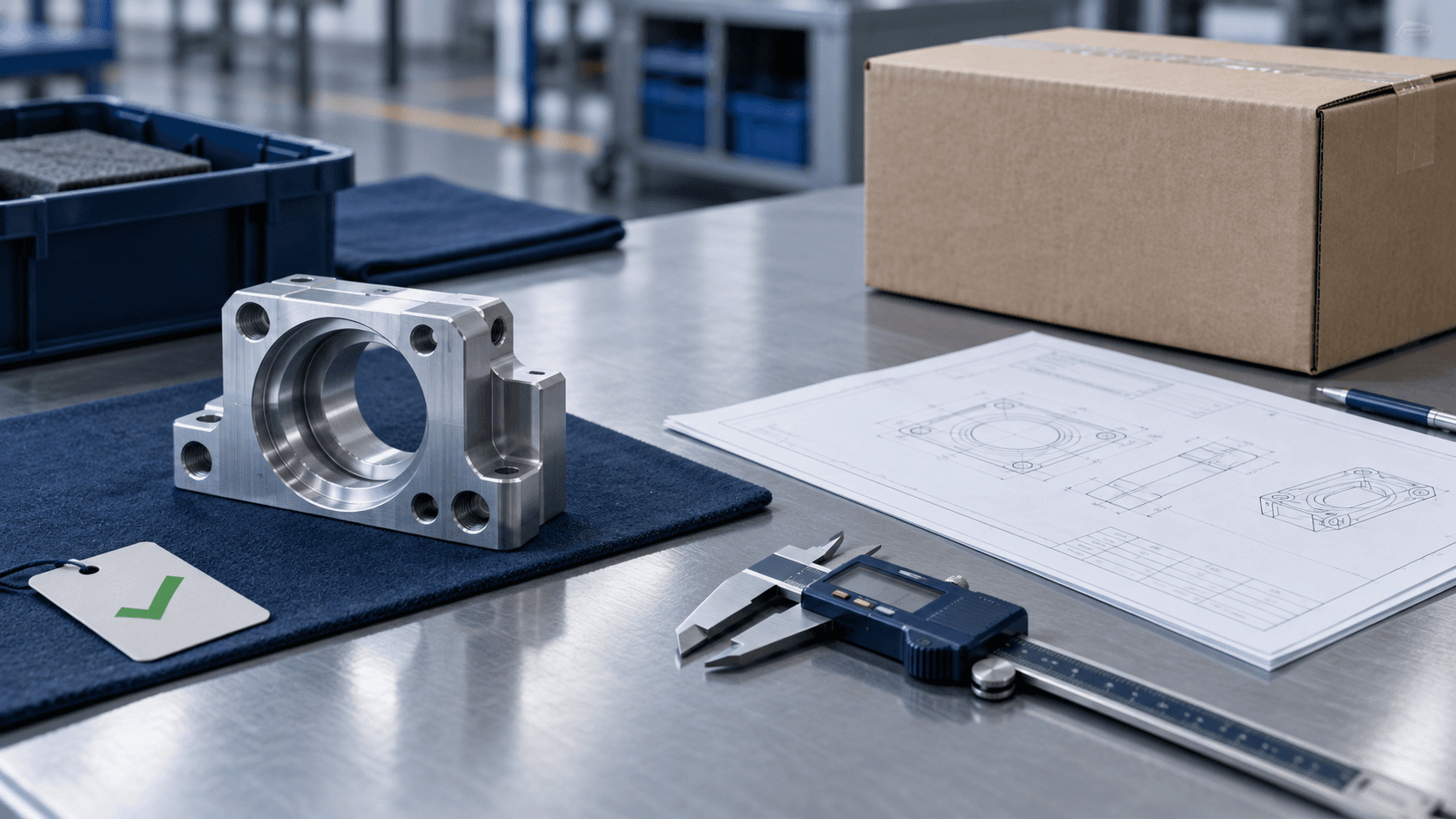
Editorial image; not evidence of a factory visit or test.
An approved sample is a decision point, not the whole production instruction
A sample can confirm important things: appearance, basic function, fit, finish, material feel, or how a product will be presented. It does not automatically confirm every production condition. The production version may still depend on quantity, material availability, tooling, packaging, artwork, test requirements, or the version of the files released to the supplier.
The useful question is not whether the sample is simply "good". It is what the sample was approved to prove, what must remain unchanged in production, and what still needs a written decision before an order is released.
Turn the approved sample into a controlled reference
Give the approved sample a reference name or version, then link it to the current product drawing, specification, material list, finish, dimensions or tolerances, packaging requirement, label or artwork file, and agreed quantity. A photo record can help, but it should not replace the details that cannot be reliably judged from an image.
Ask the supplier to identify any difference between the sample path and the proposed production path. For example, a prototype may use a different process, component source, tool, packaging method, or production sequence. A difference is not automatically unacceptable; it needs to be made visible and reviewed before it becomes an unplanned change.
Separate confirmed items from open production questions
Keep a short production-release record with three columns: confirmed, pending confirmation, and not included. Confirmed items can be tied to the approved reference. Pending items may include final artwork, carton markings, test scope, pre-production sample need, inspection point, production lead-time assumptions, or delivery terms. Not included makes clear what the sample was never intended to prove.
This distinction is especially useful when several people are involved. It prevents a buyer, designer, supplier, or logistics partner from treating an unresolved detail as if another person had already approved it.
Decide the next control before production starts
For a straightforward repeat product, a signed specification and packaging record may be enough. For a new, technically sensitive, customized, or higher-value product, the next control could be a pre-production sample, a focused document review, an agreed inspection checkpoint, or a further technical clarification. The appropriate step depends on the product and the risk; it cannot be assumed from the supplier's catalog or a single sample alone.
MAX Sourcing Context can help buyers structure the China-side questions, organize the approval record, and identify what should be clarified before mass production, inspection, or shipment planning. We do not certify production quality or replace product testing, legal review, or third-party inspection.
Practical checklist
- 01Give the approved sample and production version a clear reference or version number.
- 02Record what the sample was approved to confirm and what it was not designed to prove.
- 03Link product details, packaging, artwork, labels, and quantity to the same current record.
- 04Ask the supplier to identify any change in material, process, tooling, components, or packaging.
- 05Mark unresolved details as pending rather than treating them as approval.
- 06Choose the next control step before releasing production or payment instructions.
Copyright and republication
© 2026 MAX Sourcing Context. This article is published by MAX Sourcing Context. Limited quotation where permitted by applicable law should identify the article title, MAX Sourcing Context and the original link. Full republication, translation, commercial reuse or reuse of images requires prior written permission. Third-party material remains the property of its respective rights holders.
Continue reading
Explore related questions along the same sourcing decision path.

Need help clarifying the next step?
If you need China-side supplier research, factory visit support, or sourcing communication help, send us the product category and current supplier information.
Submit project detailsservice@maxsourcingcontext.com