
Supplier research
A Supplier Sends a Factory Video: What Can a Buyer Verify?
Use a Chinese supplier's production video to answer a defined process question, record its limits and decide what evidence is still needed before an order.
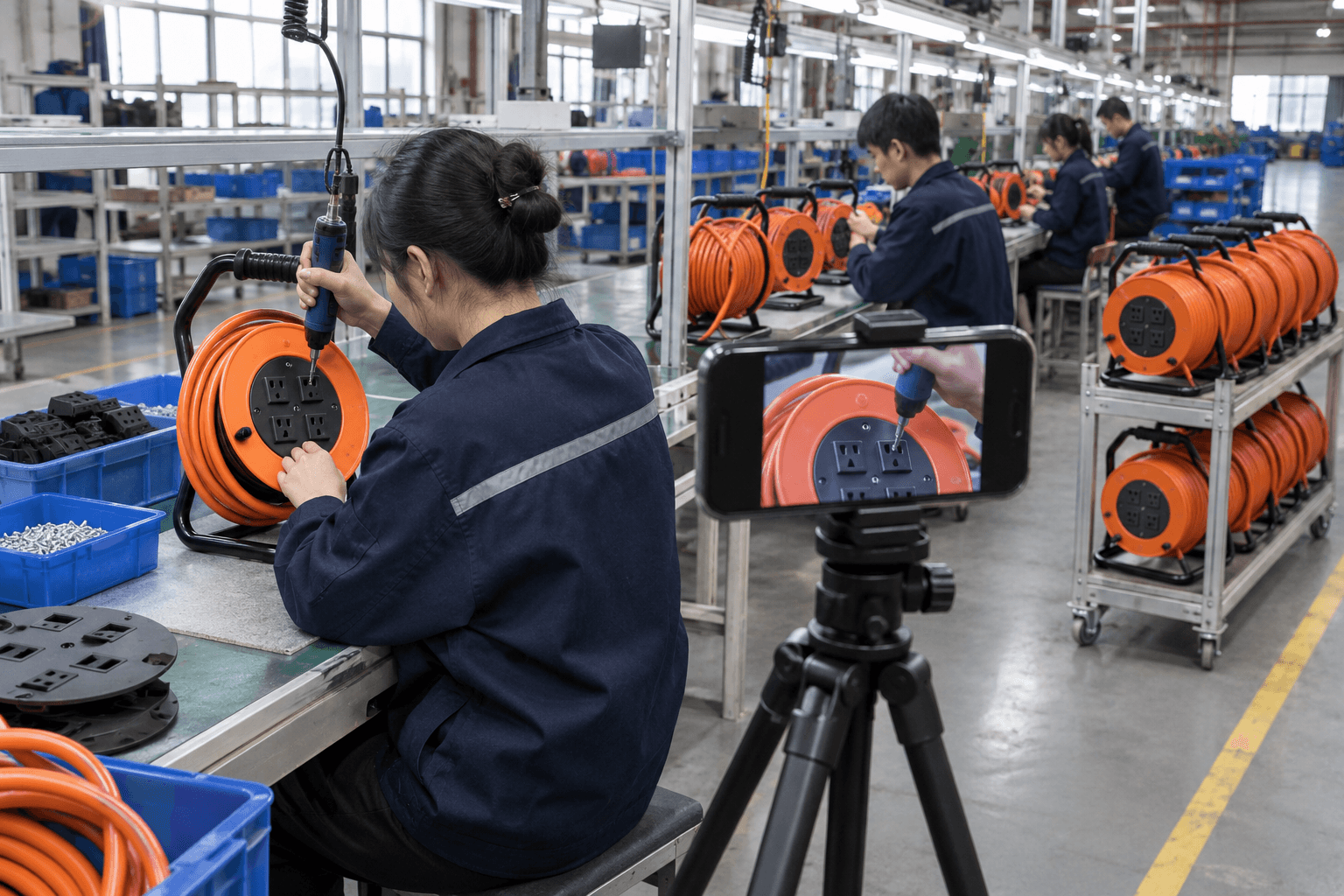
Editorial image; not evidence of a factory visit or test.
Treat the video as an answer to one question
A factory video may help you see how a particular product or process step was presented at a particular moment. It does not, on its own, verify the legal identity of the supplier, who owns the site, normal output, the quality of every unit or the condition of your future order. Before asking for more footage, state the question you need to answer: for example, which operation follows assembly for the quoted model?
This framework is for a buyer deciding whether to proceed to a sample, focused visit or order discussion. The useful outcome is a narrower uncertainty and a named next check, not a verdict that the factory has been audited.
Ask for a reference you can connect to the quote
Request the model or drawing revision shown, the process step, the filming date, the site or team claimed by the supplier and the person who can answer follow-up questions. Keep the file and the supplier's explanation together. If the video shows a similar product instead of your requested configuration, label it as similar. Do not quietly treat a demonstration model as your approved version.
Look for continuity around the step you asked about: the input part, the operation and the output of that operation. A short edit may still be useful to illustrate a machine or a fixture, but it cannot establish how often the step is performed or what happened off camera. Ask the supplier to explain cuts or missing stages when they matter to your decision.
Separate what you observed from what you were told
Use three columns in your review note: visible in the file, stated by the supplier, and still unverified. You might see an operator assemble one cable reel and a bench check in the same clip. The supplier may state that every reel receives that check. Those are different claims. To assess the second one, you need the relevant work instruction, records, sampling plan or a further scoped observation, depending on the risk.
A camera view also has blind spots. It may not show incoming materials, rework, subcontracted steps, calibration, packing or the batch you will receive. A polished video is not necessarily misleading; it is simply a limited source. Never use it as a substitute for a technical approval, independent inspection or formal product testing when those are needed.
Match the next check to the remaining risk
If the question is whether a particular feature can be made, compare a version-controlled sample with the specification. If you need to understand a process handoff, request a live walkthrough focused on that handoff and record what could not be shown. If the concern is lot conformity or site identity, agree the appropriate document review, visit or independent check with the responsible party. A live call can broaden the view but still has limits.
Before a purchase decision, record which questions are answered, which are open, and who must approve the remaining risk. Do not let an attractive clip turn an unanswered specification, sample or contractual point into an assumed approval.
Send a precise follow-up instead of asking for a factory tour video
A useful request might say: “Please identify the model and revision shown, where and when this step was filmed, and whether it is part of the process for our quoted version. Please show or describe the check immediately after this step, and note anything you cannot demonstrate.” Adapt it to your product and decision.
MAX Sourcing Context can help buyers frame China-side supplier questions, organize video claims against product references and record what remains unverified. Submit a sourcing request to define the scope. We do not certify a factory, authenticate footage, inspect a lot or approve a product through a video review.
Practical checklist
- 01Name the process question the video is meant to answer.
- 02Connect the footage to a product version, step, claimed site and filming date.
- 03Record visible observations separately from supplier statements.
- 04List what happens before, after and outside the camera view.
- 05Choose a sample, document, visit or independent check for each material gap.
- 06Assign the remaining decision and approval to the responsible person.
Copyright and republication
© 2026 MAX Sourcing Context. This article is published by MAX Sourcing Context. Limited quotation where permitted by applicable law should identify the article title, MAX Sourcing Context and the original link. Full republication, translation, commercial reuse or reuse of images requires prior written permission. Third-party material remains the property of its respective rights holders.
Continue reading
Explore related questions along the same sourcing decision path.

Need help clarifying the next step?
If you need China-side supplier research, factory visit support, or sourcing communication help, send us the product category and current supplier information.
Submit project detailsservice@maxsourcingcontext.com