

RFQs & samples
China Supplier Quote: Assembled Product or Component Kit?
Compare assembled products and component kits from China by delivery state, missing work, packing and acceptance scope before choosing the lower quote.
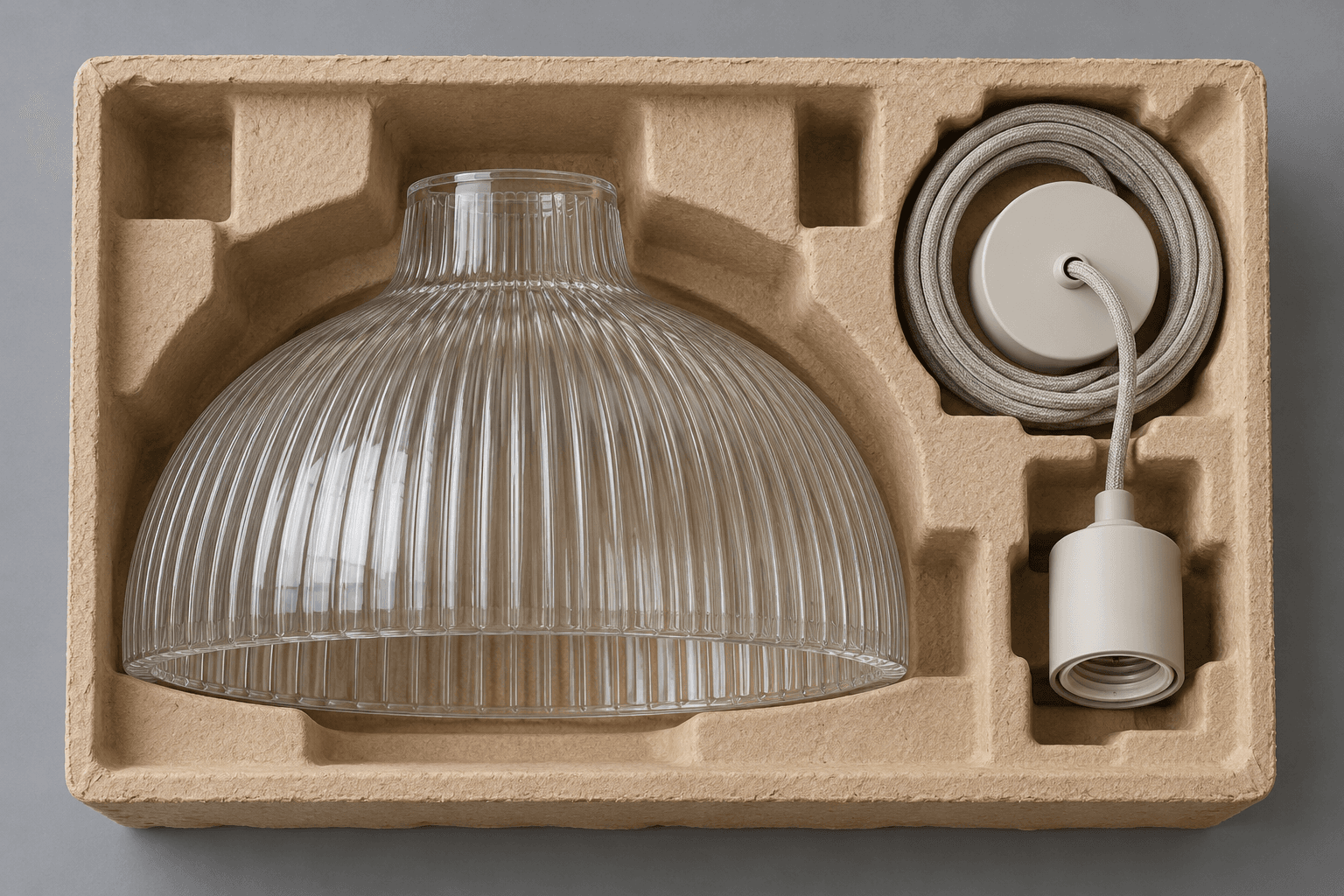
Editorial image; not evidence of a factory visit or test.
Define the state of delivery before comparing the unit price
A component kit and an assembled product should be compared against the same required outcome: what must arrive, what work remains, and who will accept the result. Ask the supplier to describe the exact delivery state before treating a lower kit price as a saving. This guide is a purchasing framework, not a technical assessment of whether local assembly is suitable.
Use a physical description rather than “complete set” alone. For an illustrative pendant-light project, does the offer cover a shade, socket, cord and fittings packed separately, a partly assembled unit, or an assembled product with specified checks? This is a hypothetical scope question, not a tested design or a real supplier quotation. The product owner must define the required configuration and involve qualified electrical and compliance specialists where needed.
Build a work-transfer sheet with one row per unfinished task
For each task, record the assembled offer, the kit offer, the party responsible and the evidence still needed. Useful rows include component sourcing, quantity reconciliation, assembly, required tools, work instructions, checks after assembly, individual packaging and replacement of missing or damaged items. Write “not confirmed” where the quotation is silent; silence is not an included service.
Ask where each responsibility starts and ends. Who supplies small fittings? Who keeps component versions aligned? Who performs the agreed checks on the final configuration? Who repacks the finished goods? A supplier’s statement that assembly is easy does not establish your team’s capacity, the technical method or the suitability of the completed product.
Request cost and schedule inputs for the same purchasing unit
First define the comparison unit: one specified finished product ready for the agreed next handoff, rather than one loose component or an ambiguously defined set. Ask for the quantities of every included part per unit, packing configuration, proposed shipping dimensions and weights, and the price basis for each option. Keep supplier estimates labelled as estimates until their basis is checked.
Then add destination-side inputs from the people who would actually do the work: labour, equipment, space, handling, repacking, checks and treatment of shortages or failed assembly. Record each amount, currency, quantity basis, date and owner, with unknowns left open. Do not assume a kit reduces freight or total cost. Ask your logistics and customs advisers how the two defined configurations affect their own quotations and requirements for the named destination; this article makes no tariff or classification conclusion.
Review a sample in the proposed delivery state
An assembled display sample cannot answer every question about a separately packed kit. If considering the kit, request a representative kit in the proposed packing and have the responsible team review the remaining work against agreed instructions and criteria. If considering assembled delivery, define which assembly and checks must already be complete when the supplier hands over the product.
Keep observations limited to what was actually reviewed: missing items, identification, fit questions, packaging damage or steps needing clarification. One trial does not establish production consistency, a universal assembly time or product compliance. Ask the relevant technical owner to decide which additional checks are necessary and who can approve them.
Choose the option whose open work has an owner
Assembled delivery may be worth further evaluation when the supplier can document the agreed scope and your team cannot reasonably take on the remaining work. A kit may be worth evaluating when the destination operation has confirmed the required capability and the combined scope and costs can be compared. If an essential task, technical acceptance or cost remains unowned, request a revised offer before choosing either option.
Your next message can be concise: “Please quote the attached delivery state, list every component per finished unit, identify work and checks excluded, and confirm the proposed packing. We will compare the options after the remaining responsibilities are assigned.” Adapt this example to the project. MAX Sourcing Context can help organise the two scopes and supplier questions through a sourcing request. We do not engineer the assembly, certify the finished product or guarantee a cost saving.
Practical checklist
- 01Describe the physical delivery state for each offer.
- 02List components and quantities per required finished unit.
- 03Give every unfinished task and acceptance decision a named owner.
- 04Obtain destination-side cost inputs without filling unknowns with assumptions.
- 05Review the sample and packing in the proposed delivery state.
- 06Ask for a revised scope before deciding if a critical responsibility remains open.
Copyright and republication
© 2026 MAX Sourcing Context. This article is published by MAX Sourcing Context. Limited quotation where permitted by applicable law should identify the article title, MAX Sourcing Context and the original link. Full republication, translation, commercial reuse or reuse of images requires prior written permission. Third-party material remains the property of its respective rights holders.
Continue reading
Explore related questions along the same sourcing decision path.



Need help clarifying the next step?
If you need China-side supplier research, factory visit support, or sourcing communication help, send us the product category and current supplier information.
Submit project detailsservice@maxsourcingcontext.com